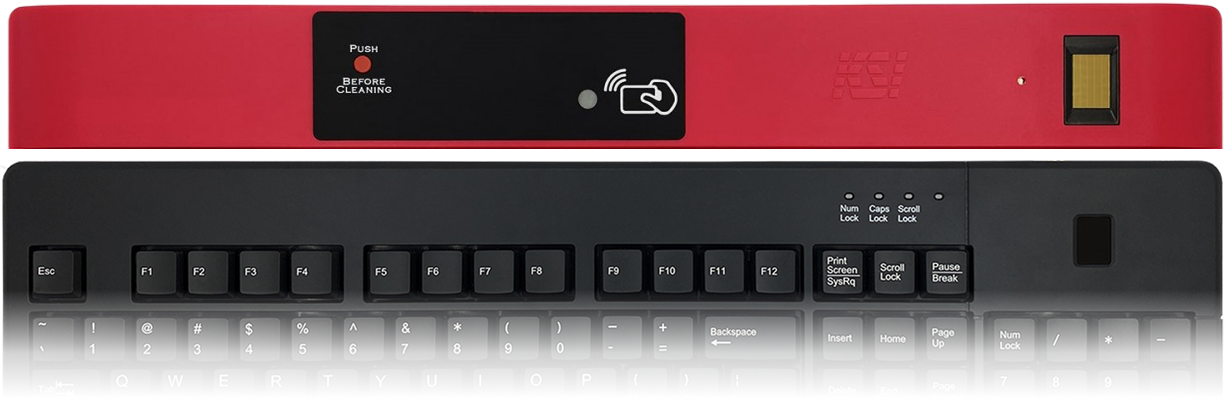
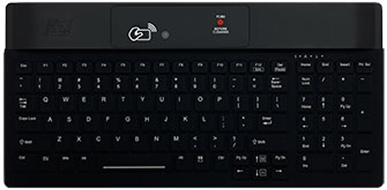
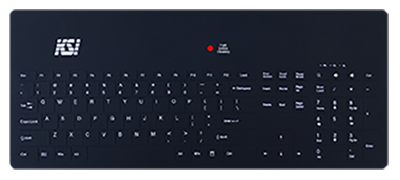
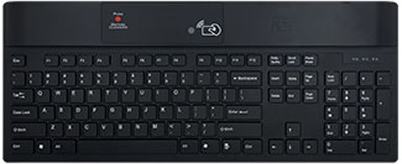
NEW PRODUCT! Discover the KSI-2400 with PresenceLock™ Human Presence Detection
Replace passwords with a fingerprint. KSI biometric keyboards and security devices combine strong identity verification with seamless workflow integration for healthcare, enterprise, manufacturing, government, and other shared-workstation environments.
Why Biometrics?
KSI biometric solutions help organizations:
Users no longer need to remember multiple complex credentials.
Ensures access is tied to the authorized individual.
Authenticate in seconds without typing passwords.
Reduces risk associated with shared or borrowed credentials.
Supports stronger identity assurance in regulated environments.
Fewer password reset requests and account lockouts.
STEP 1
STEP 2
STEP 3
STEP 4
STEP 5
Enterprise-Grade Fingerprint Authentication
KSI supports fingerprint authentication solutions built around HID technologies, helping organizations strengthen security while simplifying login workflows.
NEXT Biometrics
KSI solutions featuring NEXT Biometrics technology provide a large sensing area designed to improve usability and capture quality.
Fast, secure access at shared clinical workstations
Identity verification for operators and production environments.
Enhanced access control and identity assurance.
Strong user authentication for sensitive systems.
Secure access for faculty, staff, and shared devices.
Password reduction and improved productivity.
Why KSI?
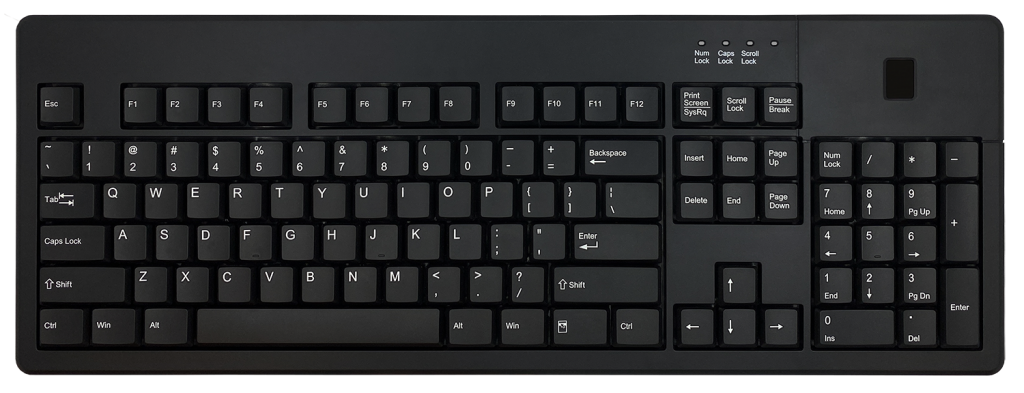
Unlike external readers that add clutter and consume valuable desk space, KSI integrates fingerprint authentication directly into keyboards and compact security devices.
Fingerprint biometrics is an authentication method that uses the unique characteristics of an individual’s fingerprint to verify identity. Unlike passwords, which can be forgotten or shared, fingerprints are tied to a specific person, helping organizations strengthen access control and accountability.
Organizations use fingerprint authentication to improve security, reduce password dependence, streamline login workflows, and ensure that system access is tied to an authorized individual. Biometrics can help reduce credential-sharing risks while improving the user experience.
Modern biometric systems typically do not store an actual image of the fingerprint. Instead, they create a mathematical template based on unique fingerprint characteristics. This template is used for future verification and cannot be used to recreate the original fingerprint image. KSI keyboards do not store human biometrics.
Fingerprint authentication can provide a higher level of identity assurance because it verifies the individual attempting to gain access. When combined with additional authentication factors such as RFID credentials or mobile authentication, biometrics can become part of a strong multi-factor authentication strategy.
Yes. Fingerprint authentication is particularly well-suited for shared workstation environments because it allows authorized users to quickly access systems without relying on shared passwords or manual login processes.
KSI offers fingerprint authentication solutions featuring technologies from HID and NEXT Biometrics. These technologies are available across most KSI product series and designed for enterprise and shared workstation environments.
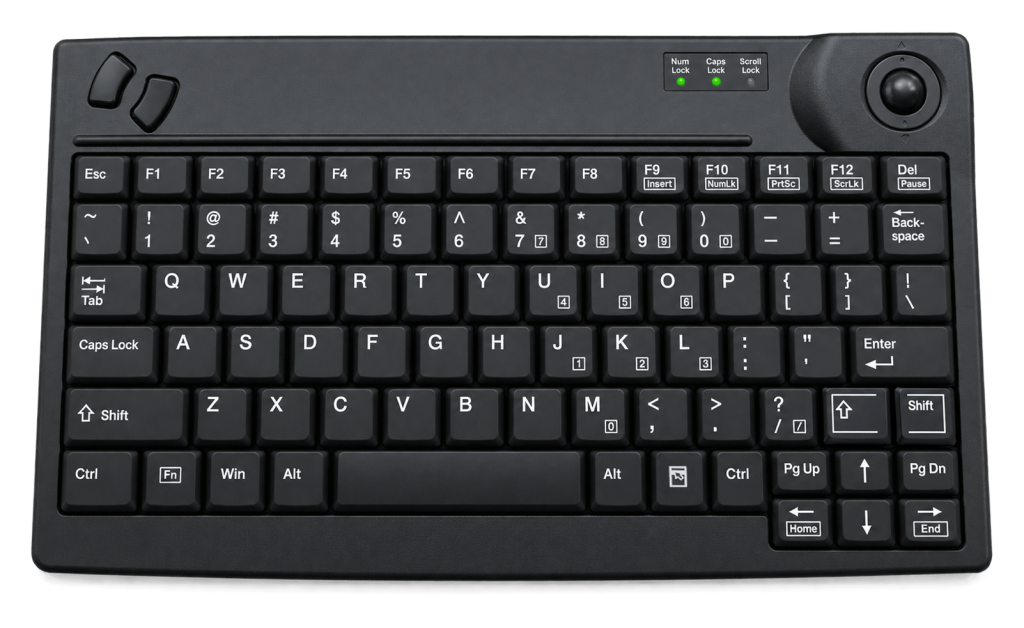
Fingerprint authentication is available on several KSI products, including select models in the KSI-1700 Series, KSI-1802 Series, KSI-1900 Security Pod Series, KSI-2000 Series, and the KSI-2100 NB.
Yes. Many KSI solutions are designed to support multiple authentication methods, allowing organizations to combine fingerprint biometrics with contactless credentials as part of a multi-factor authentication workflow.
No. KSI integrates fingerprint technology directly into supported keyboards and compact authentication devices, helping reduce desktop clutter while maintaining a familiar user experience.
Yes. KSI biometric solutions are used across healthcare, manufacturing, government, banking and finance, higher education, and corporate enterprise environments where secure and convenient authentication is important.
Yes. KSI biometric devices can serve as one component of a broader multi-factor authentication strategy by combining fingerprint verification with additional authentication factors such as RFID credentials, mobile authentication, pins, or other supported technologies.
KSI believes authentication should fit naturally into the user’s workflow. By integrating fingerprint technology directly into the workspace, organizations can strengthen security without introducing additional desktop clutter or disrupting productivity.
From authentication to walkaway protection, KSI technologies help secure the entire user session across shared workstations and enterprise environments.