NEW PRODUCT! Discover the KSI-2400 with PresenceLock™ Human Presence Detection
NEW PRODUCT! Discover the KSI-2400 with PresenceLock™ Human Presence Detection
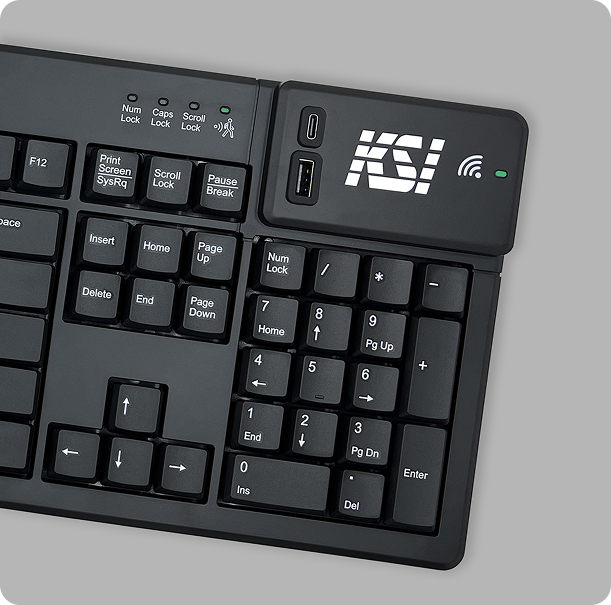
The KSI Difference
The KSI-2100 Series incorporates dedicated USB-A and USB-C security key ports directly into the keyboard workspace, creating a convenient and organized authentication environment.
Supporting Leading Authentication Ecosystems
KSI products are not limited to these providers and support a broad range of compatible security keys and authentication devices. Find more compatible security keys.






Organizations operating in regulated and security-conscious environments often seek authentication devices validated to FIPS 140-3 requirements.
KSI solutions support deployment scenarios utilizing security keys that meet FIPS 140-3 requirements, such as:
Benefits:


Industry-leading FIDO and FIPS security key portfolio

Enterprise-grade credential and security key solutions

FIPS 140-3 validated security key options for regulated environments
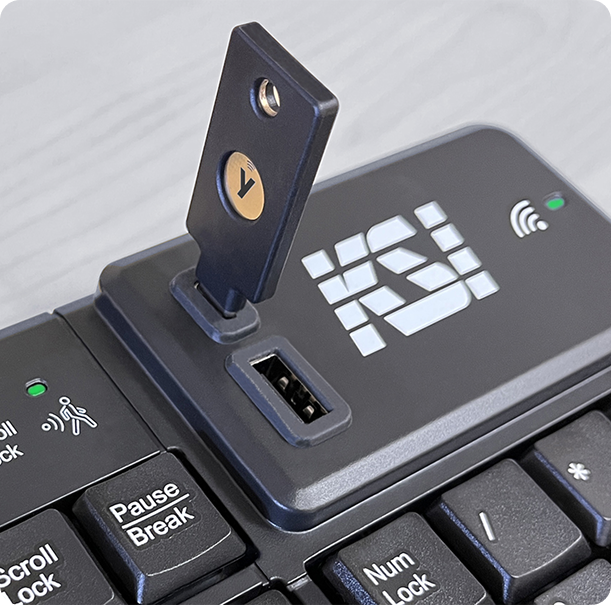
Beyond Security Keys
Many organizations rely on smartcards and credential-based authentication technologies, including:
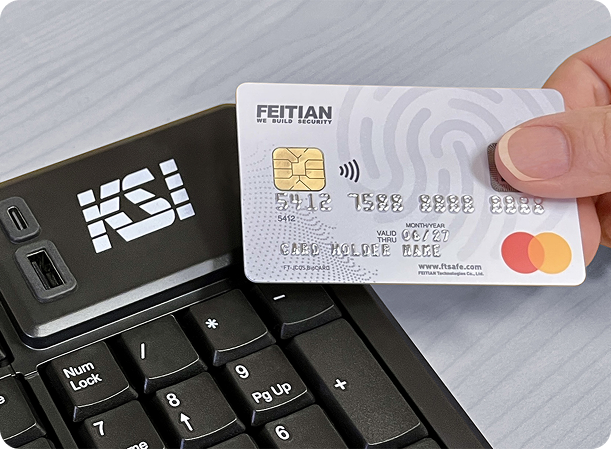
KSI solutions support authentication environments utilizing biometric smartcards and advanced credential technologies that combine Something You Have (the card) and Something You Are (the fingerprint) in a single credential.
Supporting Passwordless Authentication Strategies
KSI is a member of the FIDO Alliance and supports organizations pursuing passwordless authentication initiatives through security key deployment and modern credential workflows.

Session Security Ecosystem
Security keys and smartcards play an important role in modern authentication strategies as part of a broader session security approach. Explore the full KSI technology ecosystem.
While both are authentication credentials, they are typically used differently.
Security keys are commonly associated with FIDO, passwordless authentication, and phishing-resistant login workflows.
Smartcards are often associated with PIV, CAC, PKI, and enterprise credential environments where certificates and identity credentials are stored on the card.
Both technologies can support strong authentication and multifactor authentication initiatives.
The KSI-2100 Series features dedicated USB-A and USB-C security key ports designed to support organizations deploying security keys and passwordless authentication strategies. These integrated ports provide convenient access to authentication devices while reducing desktop clutter.
KSI solutions support authentication environments utilizing security keys from a wide range of vendors. Featured providers include Yubico, HID, FEITIAN, IDEMIA, Hirsch, and Swissbit. Compatibility can extend beyond these vendors depending on the authentication environment and deployment requirements.
Yes. KSI products can support environments utilizing FIPS 140-3 validated security keys. Featured examples include select offerings from Swissbit, IDEMIA, and Yubico. Organizations should verify specific certification requirements and device configurations when planning deployments.
FIDO-Ready refers to support for modern authentication workflows utilizing FIDO standards, including security keys and passkeys. FIDO authentication helps organizations strengthen security, reduce reliance on passwords, and support passwordless authentication initiatives.
Yes. KSI is a member of the FIDO Alliance and supports industry efforts to advance secure, passwordless authentication through standards-based technologies and authentication workflows.
A passkey is a modern authentication credential designed to replace traditional passwords. Passkeys provide a more secure and user-friendly authentication experience and are increasingly being adopted across enterprise, consumer, and government environments.
Yes. Security keys are commonly used as a factor in multifactor authentication (MFA) workflows. Depending on the deployment, a security key may be combined with another factor such as a PIN, biometric verification, or another credential.
A biometric smartcard combines a traditional smartcard credential with onboard biometric verification. These credentials can support authentication workflows that combine:
This approach may help organizations achieve strong identity assurance and multifactor authentication objectives.
Yes. Security keys and smartcards are often deployed alongside other authentication technologies, including RFID/NFC credentials, fingerprint biometrics, mobile authentication, and human presence detection. Organizations frequently combine multiple authentication methods to support security, compliance, and user experience objectives.
Organizations increasingly deploy security keys and smartcards to:
These technologies help organizations modernize authentication while maintaining strong security controls.