
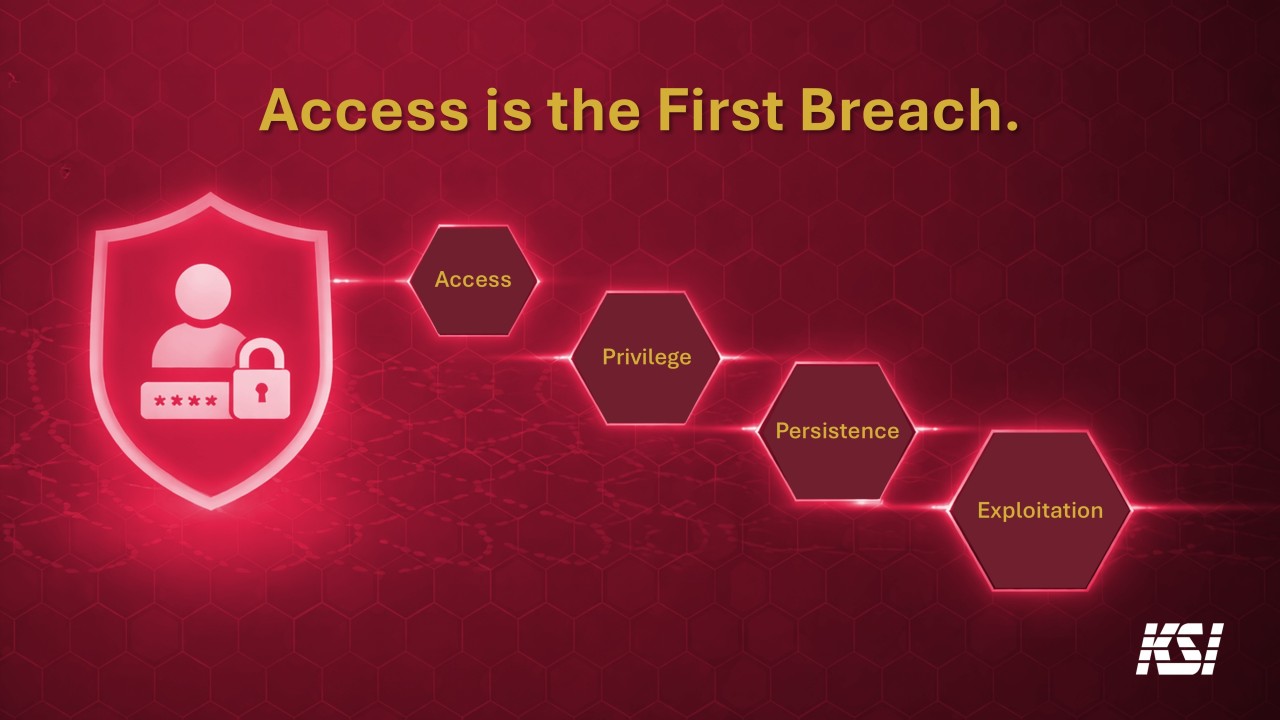


For years, cybersecurity conversations have centered on malware: viruses, ransomware, trojans, and exploits. While those threats still exist, they’re no longer where most successful attacks begin.
Today’s breaches usually start somewhere far quieter – with access.
Stolen credentials. Unattended sessions. Weak authentication. Shared workstations. Legacy login habits that were never designed for modern threat models. Attackers don’t need to break in anymore. They log in.
The Shift From Breaking Systems to Blending In
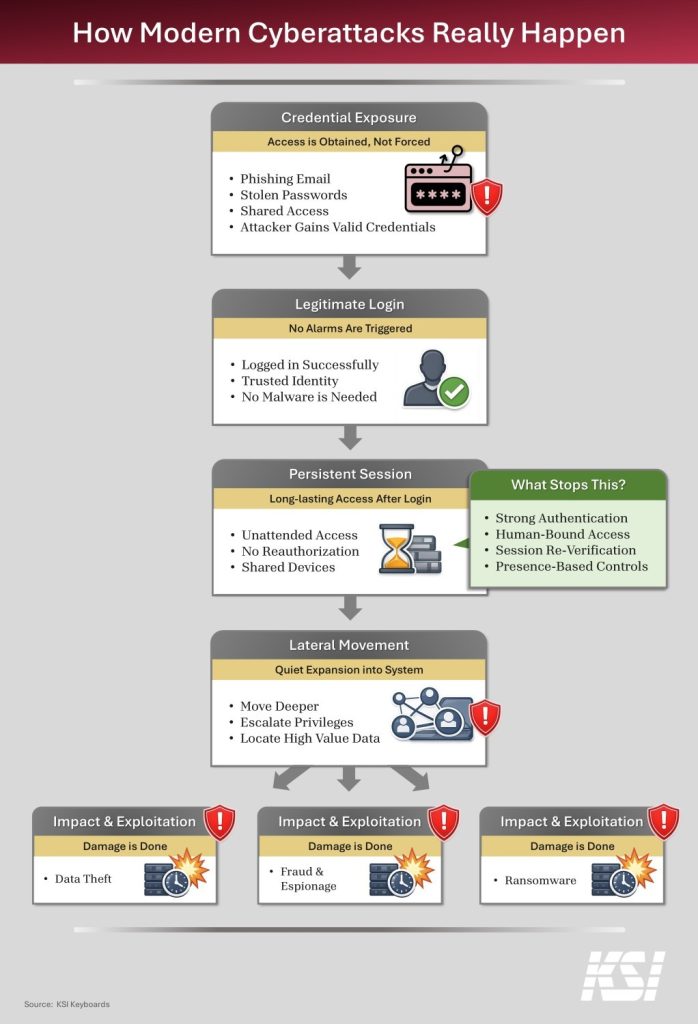
Modern attackers aim to look legitimate for as long as possible. Once they have valid access, they can move laterally without triggering alerts, access sensitive systems under a trusted identity, escalate privileges slowly and quietly, and blend in with normal user behavior.
By the time malware appears – if it appears at all – the damage is often already done. This is why so many high-profile incidents trace back to phished or reused credentials, compromised passwords, session hijacking, shared devices without strong re-authentication, and authentication methods that verify once then trust indefinitely.
Why Access Is the New Attack Surface
Access is attractive because it’s:
- Low noise – no exploits are required
- Scalable – one credential can unlock multiple systems
- Persistent – long sessions mean long exposure
- Hard to distinguish from real users
If an attacker looks like an employee, traditional defenses struggle to respond. Firewalls don’t stop valid logins, antivirus doesn’t question authenticated users, and security tools become ineffective when nothing looks out of place.
The Hidden Risk of Shared and Fast-Paced Environments
Access risks multiply in environments where multiple users share the same workstation. Speed is prioritized over re-authentication, sessions remain open for convenience, and devices are trusted more than people. These risks can occur in healthcare, manufacturing, finance, government, higher education, and more. Anywhere shared systems exist, the access gaps widen. Without strong, continuous verification of who is present, organizations are left trusting that the right person is still at the keyboard.
That’s a dangerous assumption for enterprises with so much at stake.
Rethinking Authentication: Verify the Human, Not Just the Login
Modern security isn’t about adding more passwords or more authentication complexity. It’s about assurance.
Effective access protection answers these questions:
- Is the authorized human actually present?
- Is authentication tied to the user, not just the device?
- Does trust expire when the human steps away?
- Can access be re-verified quickly without disrupting work?
This is where modern authentication models – biometric, physical authentication factors, and presence-based controls – now matter more than ever.
Zero Trust Isn’t a Slogan – It’s an Access Philosophy
Zero Trust is often misunderstood as a network concept. In reality, it begins at the moment of access:
- Never assume presence
- Never assume continuity
- Never assume legitimacy based on past logon success
Every session is a question, not a conclusion.
When access is continuously verified, attackers lose their greatest advantage: the ability to hide in plain sight.
If Access is the Front Door, Secure it Accordingly
Modern attackers don’t kick down doors. They wait for someone to leave it unlocked.
Organizations that still focus primarily on malware detection are fighting yesterday’s battles. The real security gains now come from controlling access with intention, intelligence, and accountability.
In today’s threat landscape, the most dangerous breach doesn’t start with malicious code – it starts with a trusted login used by the wrong human.